Amisk Hotel
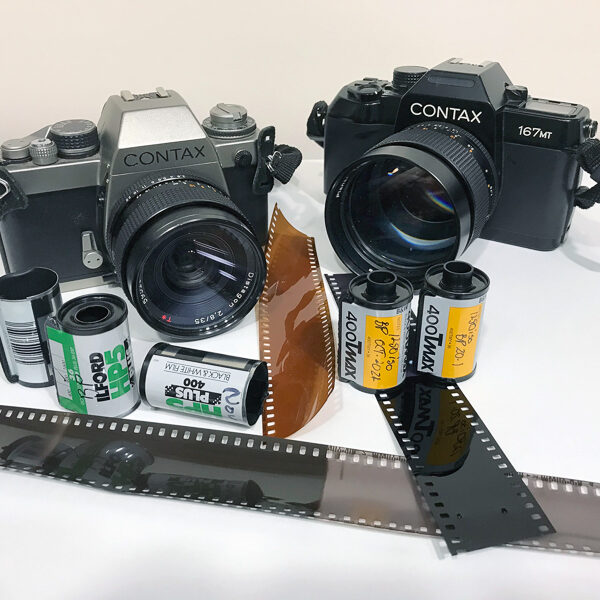
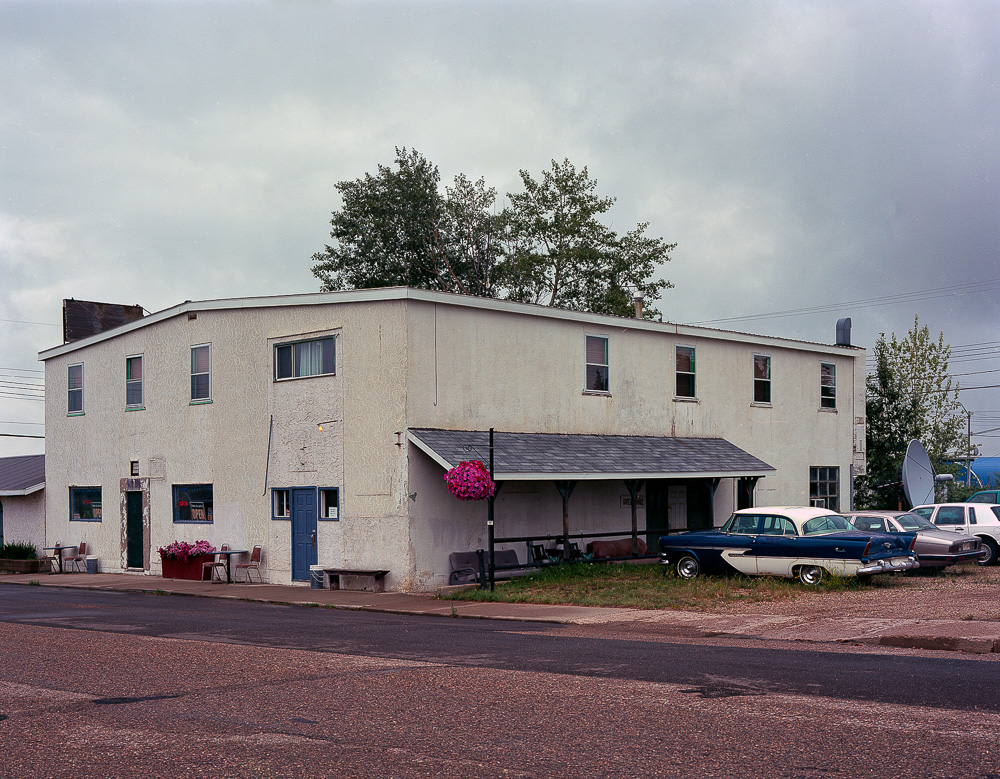
BP 31.0: The Amisk Hotel, built in 1955. Visited July 20th 2025. Team: Rob & Chris. Guest photographer Arturo Pianzola. Camera Gear: Ebony 4×5″ View Camera (Film), Contax 35mm Film, Canon 6D & 70D. Arturo: Leica 35mm film.
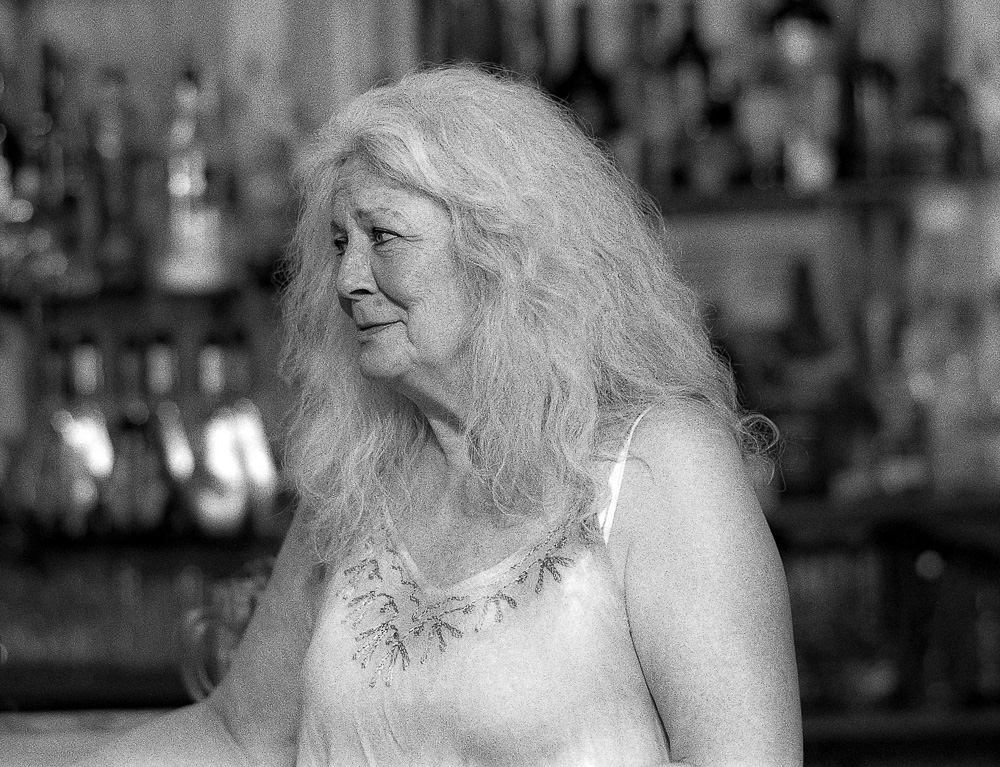
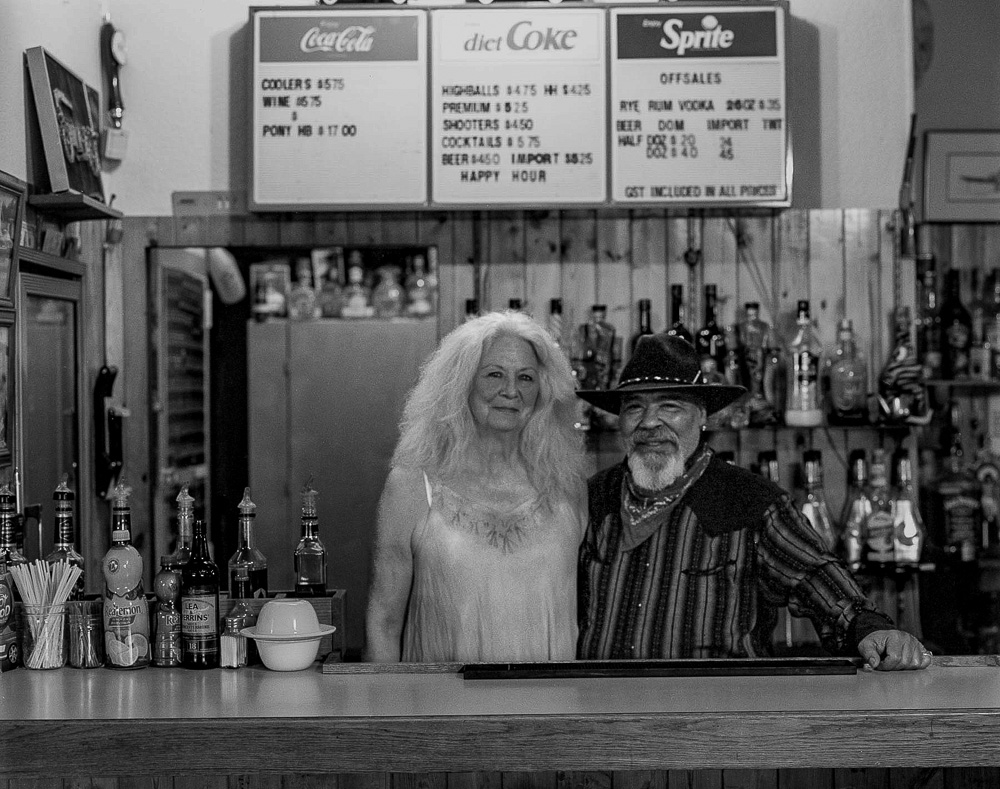
Interviews conducted with: Lee & Jacquie (owners).
The Amisk Hotel is located on 51st Street, a couple of lots up from 51st Avenue, which also doubles as Alberta Highway #13. This is a touch unusual and in most small prairie towns that follow a similar street naming formula (a lot do), the central or main intersection is 50th and 50th. Prior to the 1970s, the streets here had names.
Like virtually every other town on the Canadian Prairies, it is tied to the railway. Amisk began in 1906, in anticipation of a Canadian Pacific line arriving and many of the first settlers were of Scandinavian ancestry. This is reflected in local names and culture. The town’s name when translated from the Cree language means Beaver. To this day they are common in areas ponds and waterways.
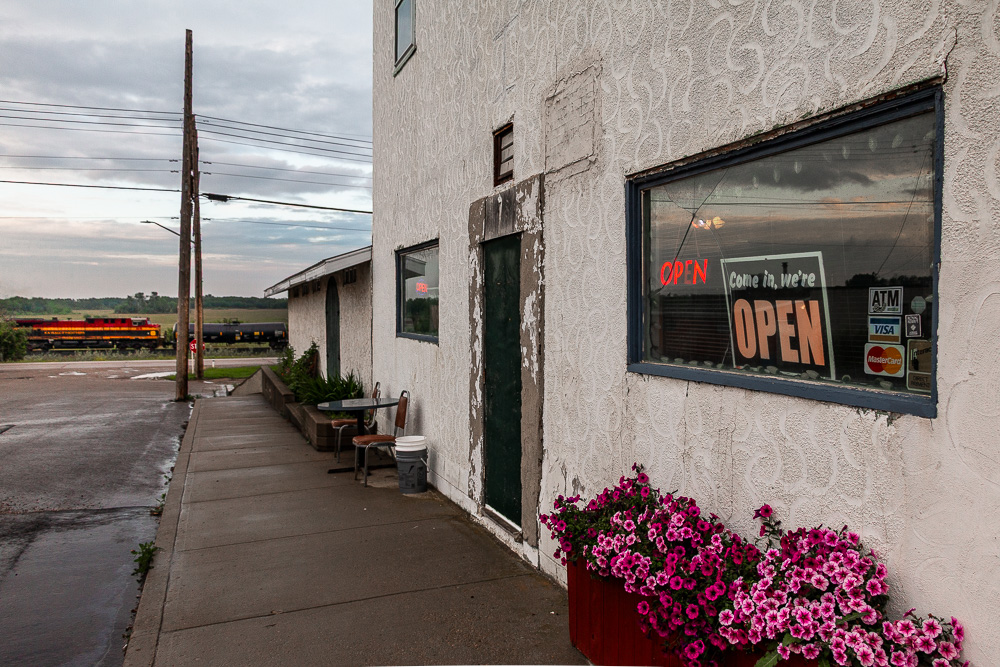
Construction of the railway line did not proceed quickly, and it was not until 1910 that it was finally completed and soon after opened for commercial traffic. It now belongs to the Canadian Pacific Kansas City Railway and is a secondary line from Wetaskiwin Alberta, paralleling Highway #13 east into Saskatchewan.
It is a moderately busy track, hauling mostly grain, potash and petroleum products.
The Amisk train station was not far away from the hotel, just down the tracks at about the mid-point between 50th and 51st. Passenger service on this line lasted into about 1960.
“We’ve been putting a lot of TLC into it because it was pretty neglected for quite a few years.” – Jacquie.
“We’re still looking for the stash that one waitress was skimming long ago. Everybody knew she was stashing bills in the ceiling tiles or something, allegedly. But, you know, you think if she put it there, maybe she took it back.” – Lee, speaking of a possible windfall hidden in the building.
Amisk started out small and the first Henderson Directory we could find that mentions the community listed the population at 12 in 1911. Three years later the town boasted 50 residents, and a decade after it had grown to 75. It was noted that over 130 people lived in the vicinity on farms in the ’20s.
For the next couple of decades there was limited growth and not until the 1950s did Amisk’s population top 100, which officially allowed them to have the title of village. From the 1960s until the 1980s the number of folks living here hovered between 150 and 200. Today it sits at about 220.
In the 1920s Amisk was home to a restaurant, livery, general store, implement dealer, grain elevators, automotive dealership and garage, lumber yard, dairy, barber shop, school, church and even a newspaper.
The depression of the 1930s took a heavy toll on the town businesses and many did not survive that period. The few that made it through the dirty thirties were mostly gone by the 1960s. The grain elevators, however, lasted into the ’80s.
Today the only businesses remaining are the hotel, a card lock gas station, a grocery store and post office. Town offices too and it has an attached library that was established about a century ago, making it is one of the oldest in rural Alberta .
“I’ll tell you how it happened (in search of a business to run, a cousin connection and chance encounters)…
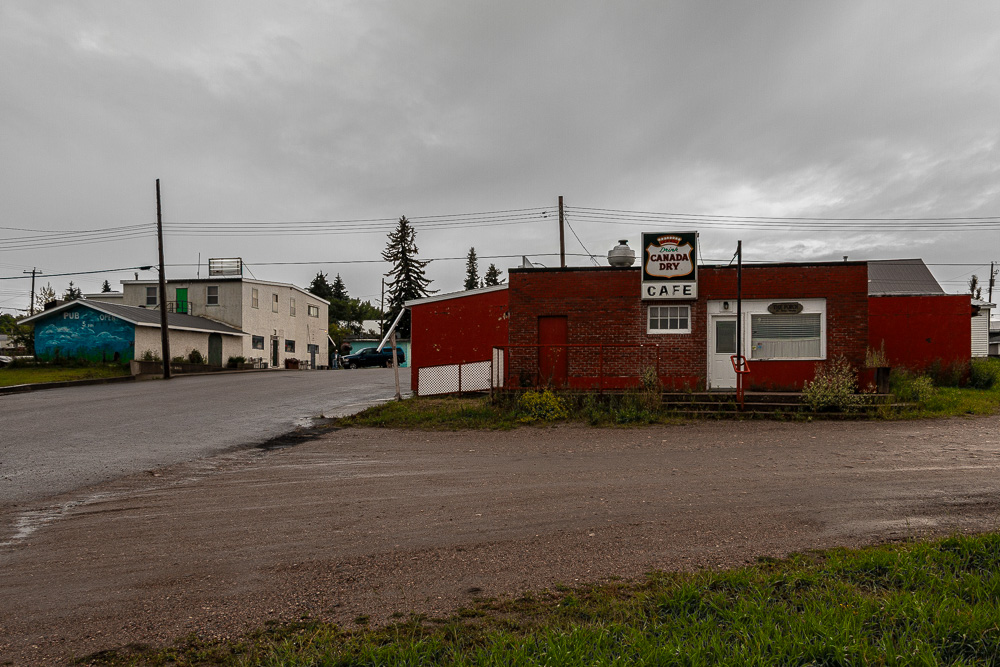
That’s this café right here….(down the street – still standing but closed)…and he (my cousin) said it’s for sale. And I always wanted a café. I cooked great meals. Anyway, so I said, Jacquie, you want to go for a ride on Sunday? To check this café out.
We couldn’t get the realtor to come to town to let us in to have us look around. So I’m not buying anything just on looking on the outside. So the (Amisk Hotel) bar said it was open…let’s go have a beer! So we come in and the waitress said, so what are you guys doing in town? Where are you from? We’re from Edmonton and we came out here to buy this café. Well, at least look at it. And she said, oh, well, this hotel’s for sale…the owner’s daughter’s upstairs and do you want me to go get her?
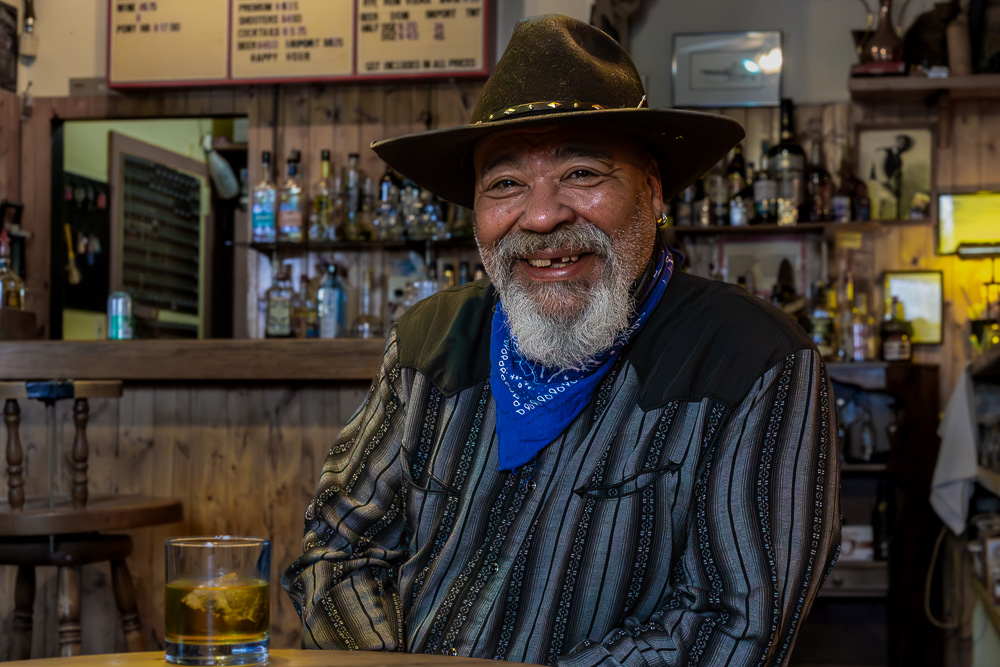
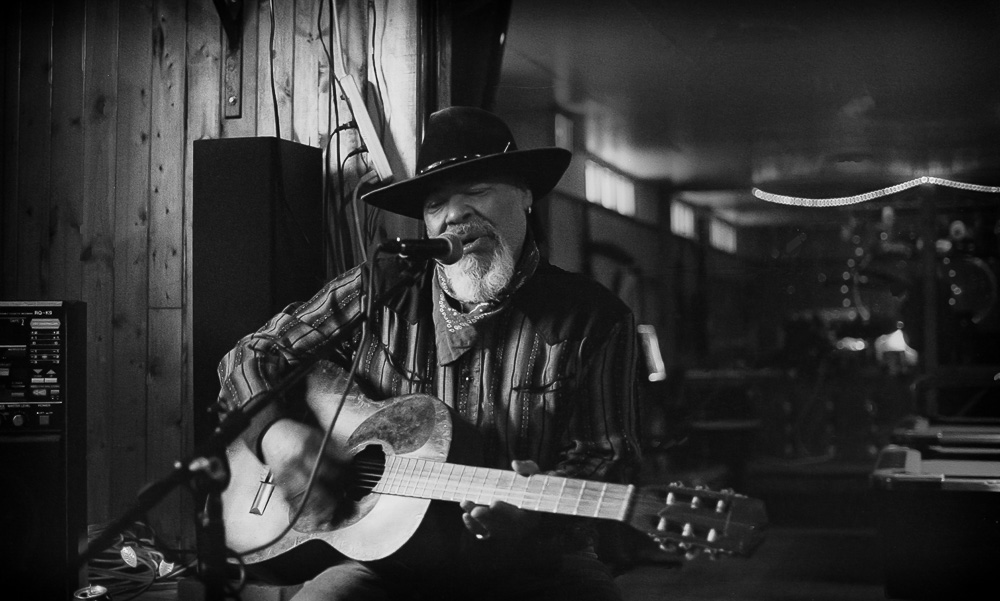
We start talking. And we talked. And she talked. And they talked. And then she talked again. It was a lot of talk. And then she asked me to come play for a weekend (Lee’s a musician) and now we own the hotel.
That was pure synchronicity. If I had gone to my cousin’s like I was going to, it would have never happened. This would be a whole different reality right now. (We) never had intentions to be hotel owners.” -Lee & Jacquie together, on how they got here.
A hotel, not mentioned by name, and owned by one Miss Chatten makes mention in the local Amisk history book in a summary of businesses and happenings from 1911. It is said she just bought the hotel, suggesting it was already standing and in operation at the time.
The history book, speaking of newly installed phones put in during 1921 in Amisk, lists a Thornquist Hotel. This is the only time the hotel is referred to by this name, but it is noted they had manager by that name, so it may have been in reference to him. We think it carried the Amisk Hotel the since it was built.
The first mention of the Amisk Hotel in the limited selection of Henderson Directories we have available to us, was in 1924, with the owner listed as one Dea Gin. The same owner is listed for the local billiard hall, which may have been in the hotel, but it is not actually stated. Henderson Directories were generally pretty good for listing businesses at the time, but sometimes left things out.
The history book lists the hotel as being in the multi-unit Matusch Block and shared it with other businesses.
By the late 1920s John Welsh had taken over from Dea Gin. The most recent Henderson Directory that we have access to that lists Amisk was in 1929 and after that we carried out research based on telephone directories. These are typically less detailed. And the local history book too, but info on the hotel is spotty.
By 1930 WG Amundsen had taken over from Mr Welsh, and he operated the hotel well into the 1940s.
However, an Eric Stromquist is also listed from the 1930s to 1950s and in a passage in history book he is listed as owner for that time, but also as a worker there, It is a little confusing and there is conflicts.
The history books mentions a Mr & Mrs Brand may have managed the hotel in the late 1930s. It also said a beauty parlour operated in the hotel about this time.
“Yeah, so it was about two months before they called the shutdown for COVID that I said, it paid its own bills. We don’t have to subsidize it this month. And it happened the next month and then came the shutdown. Oh, it was awful. And then during that time and then after is when all the young guys started becoming dads and, you know, got their wife at home now. So they’re not allowed to be in the bar with the boys.” – Jacquie, on the challenges of the last few years.
“My family tells me every time they come, they see how much we’ve done, like how much we’ve changed it and made it better. But most of it, there hasn’t been the money to do. Like we wanted new windows or to reinforce some, get some new doors and things like that. But with the money not coming in, we’ve just kind of been scrubbing and changing. And, you know…” – Jacquie, on doing their best on a tight budget.
By 1948 Oscar Lindgren had taken over, followed the next year by OJ Larsen. You will notice most of these names echo the Scandinavian ancestry of early area settlers. By the early 1950s, telephone directories no longer listed the hotel owners. However the history book offers some insight and we have shared what we found later in this write up.
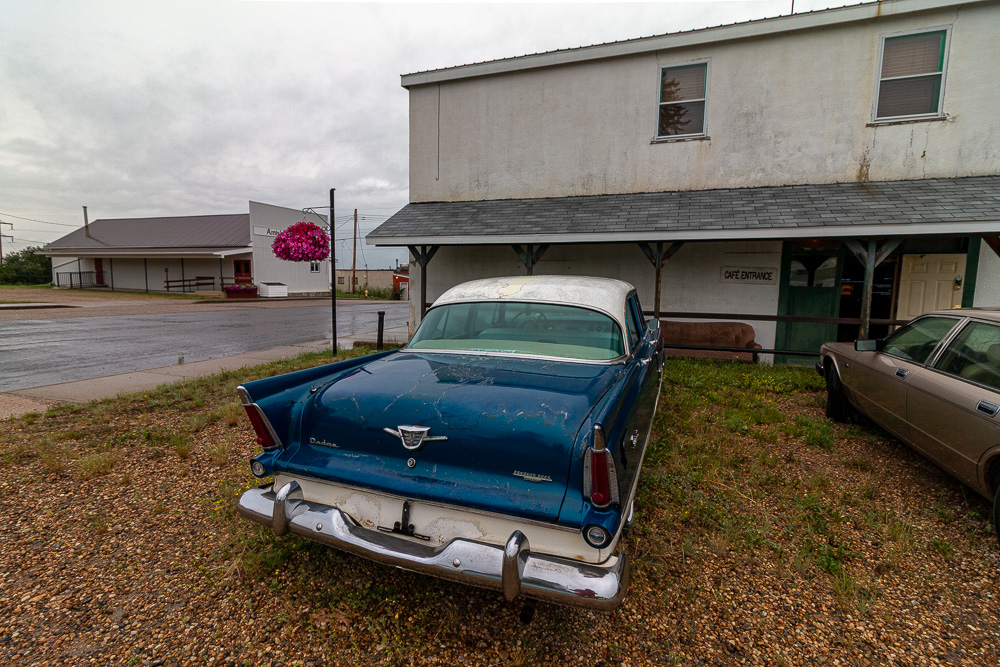
Amisk got electricity in 1954 and coincidentally, the Amisk Hotel burned down later that year (New Year’s eve). The current hotel is from from 1955 and it opened that fall.
A photo of the current hotel when it was still new shows up in the Molson Breweries archives. Molson supplied the Amisk Hotel Beer Parlour and they kept photographs of each establishment they supplied in their files. These photos and the information accompanying them has proven immensely helpful in our research for the Beer Parlour Project in general.
That early photograph shows the hotel with a false front, and the extrior finished with Insulbrick. This was an inexpensive wall cladding material manufactured much like asphalt shingles, but with the appearance of brick, that was both common and popular at the time. While functional and good when the budget is tight, it did little aesthetically.
False fronts were common and made a building look more impressive than it actually might be, but also afforded a good place for signage. The Molson photo confirms the false front of the Amisk Hotel was used for that purpose.
By 1960, the false front was already gone as was the the fake brick. However, the layout of the doors and windows remains pretty much the same as when it was built.
“You know, we’ve had people phone and say, oh, do you guys have a pool? It’s like, no, you share the shower down the hall with everybody else. It’s almost like a rooming house. That’s why I think it would be great as a bed and breakfast or something. We’ve had a few times where there was an oil crew of maybe four guys come out and we’ll rent them rooms, you know, and they’re all working like on something out here.” – Jacquie, the challenges of renting rooms in an old building.
“I found a note in the back of one of the books at the library. There was a handwritten thing about the hotel owners. And they had said, as of this writing, 1977, the bar has a posh new carpet. I thought, oh, that was a posh carpet in ‘77. About 40 years old…40 years and a million spilled beers. It was just nasty and you smelled it every time you walked in. Oh, and we ripped out that old carpet.” – Jacquie – carpeted beer parlours seems like a bad idea, but we have heard of it before at other places we visited.
There are two doors to the present pub and one might be a holdover from the old “Ladies & Escorts” rule during the Beer Parlour era. In the 1940s and ’50s liquor laws mandated a separate door for ladies, who could only enter if escorted by a male companion. Any male would do, be they a husband, boyfriend, brother or some guy off the street.
In 1974, a single level addition was constructed on the north side which allowed them to expand seating. This occurred about the time liquor rules were relaxed and allowed for things like more floor space, food service, the serving of hard liquor, amusements and live entertainment. Before, many of these were not allowed. An addition at the back of the hotel may also be from around this time.
Newspaper advertisements over the years indicated that the hotel was for sale on multiple occasions. When listed in 1958 it had nine rental rooms. In the early 1960s there were several for sale advertisements in quick succession. At that point it had ten rental rooms, a 48 seat beer parlour and a 28 seat coffee shop. It was listed as an almost new hotel, further confirming the build date, and for a $5000 down payment it was all yours.
In 1970 the hotel is listed for sale once again, still with ten rooms and combined seating for 100 in the tavern and coffee shop. Four years later it is once again for sale, with the same features, but by then the required down payment had increased to $50,000.
“(The hotel Cafe) had already been closed down a couple of years before we got here. And since we’ve been here, the little cafe (the one down street they looked at) has been bought twice. And it even they can’t keep it going for a while. Both owners. I think it was about a year, year and a half and they just said they can’t continue. The one lady still owns it and she’s kind of thinking maybe one day to open it again. But I can’t see it and there’s just not enough population here to support it.” – Jacquie, the challenges of running an eatery in the small town.
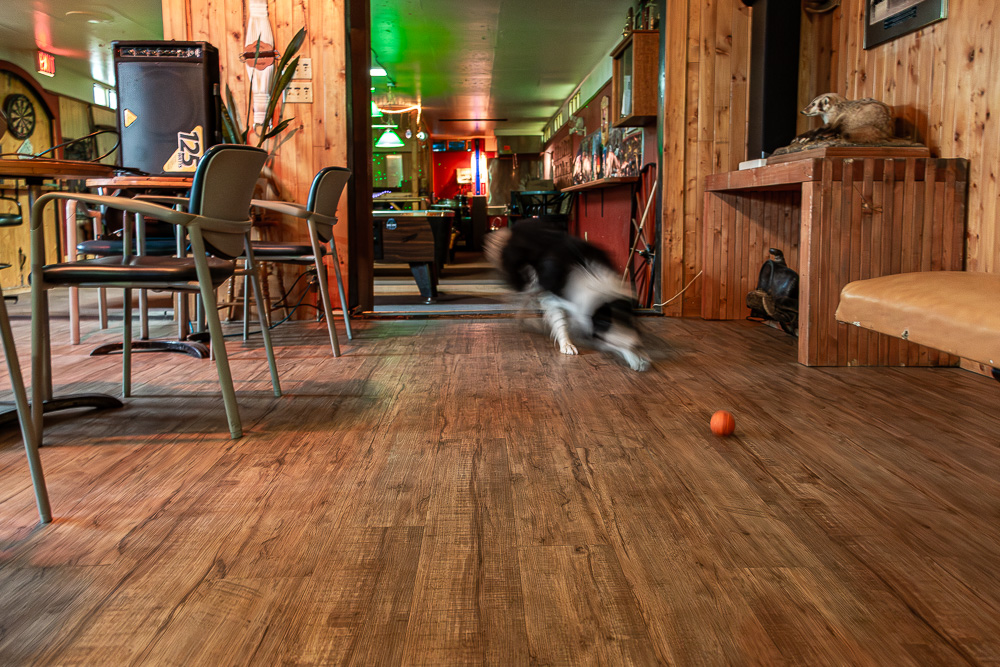
The current owners now reside upstairs in the hotel and some former rooms can be pressed into service if need be. Food service was available until just a few years ago and the kitchen is still intact. Perhaps one day they will offer it again.
Past owners and mangers of the first and second Amisk hotels, as provided by the local history books, includes the following: someone named Rock(?), Anton Ekholt, Arvid Erickson, Henry Johnson, Louis & Irene Helinka, Nola Chyzowski, Doug & Marg MacGregor, Nick & Rose Sorochan, Derald & Vita Erickson. Jeremy Fenton, Gary Gleis, Steve & Ruth McDermand, and Lloyd & Pam Forseth.
This was current at the time of the publishing of the Amisk history book in 2005. It is assumed the list is in somewhat of a chronological order, but we can not say for certain, and it excludes names mentioned earlier in this post, where were do have a bit or a timeline. Some folks may have owned or managed it for some time and for others it may have been a brief foray into the business.
It’s a tough one and running a small town hotel is for everyone. What role these people played, be it owner, manager or as both, is not clearly defined in the book. We can say, as we’ve noted during the Beer Parlour Project, that these business can change hands often.
The current owners Jacquie and Lee, have had it for just over decade now. The night we visited was a quiet one and the only noises heard were that of Lee serenading our little group and the rumble of a passing train. “Thanks for singing happy Birthday to my granddaughter Lee – sent it to her and she loved it.” – Chris.
Amisk, Alberta. Population just over 200, in the Municipal District of Provost #52 and it is some 220km southeast of Edmonton.
“Yeah, I got friends in low places
Where the whisky drowns
And the beer chases my blues away
And I’ll be okay
Yeah, I’m not big on social graces
Think I’ll slip on down to the oasis
Oh, I got friends in low places”
Garth Brooks – Friends in Low Places
Click image to open lightbox.
35mm = Contax 35mm Film
4×5″ = Ebony 4×5″ View Camera
Film images may reflect the unique challenges & difficulties of shooting in these low light environments.

Know more (new tab): Amisk Hotel Amisk Alberta