Blue Saloon Carseland Hotel
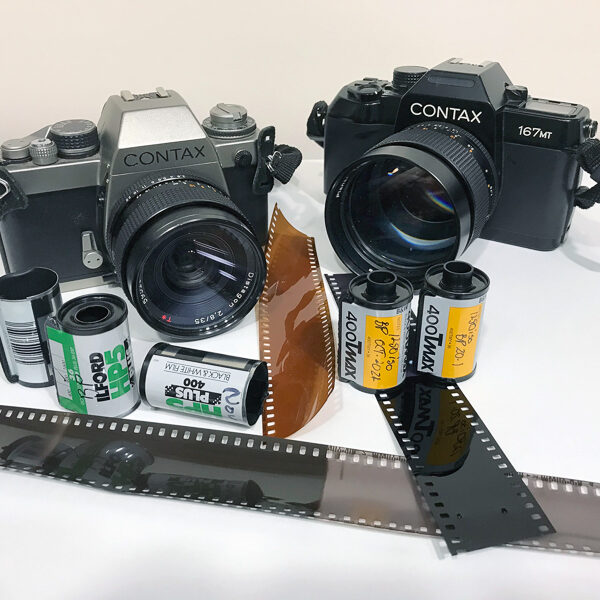
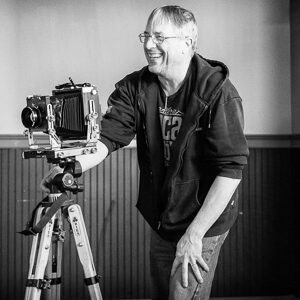
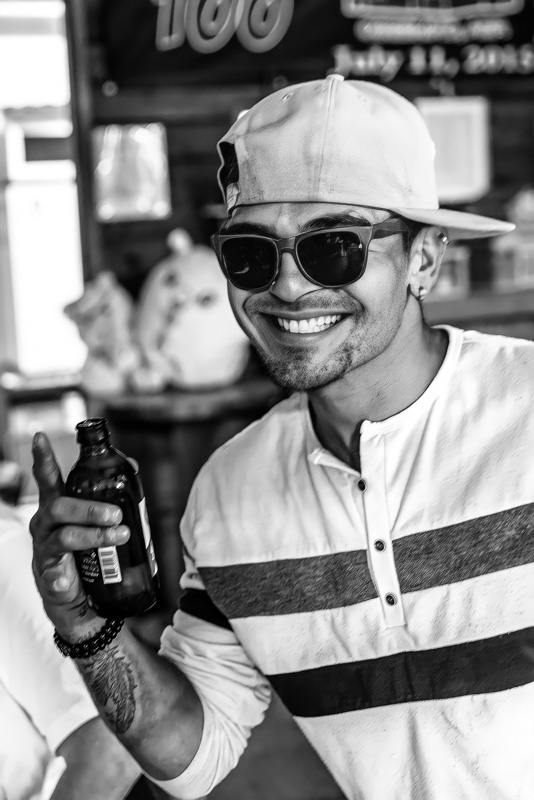
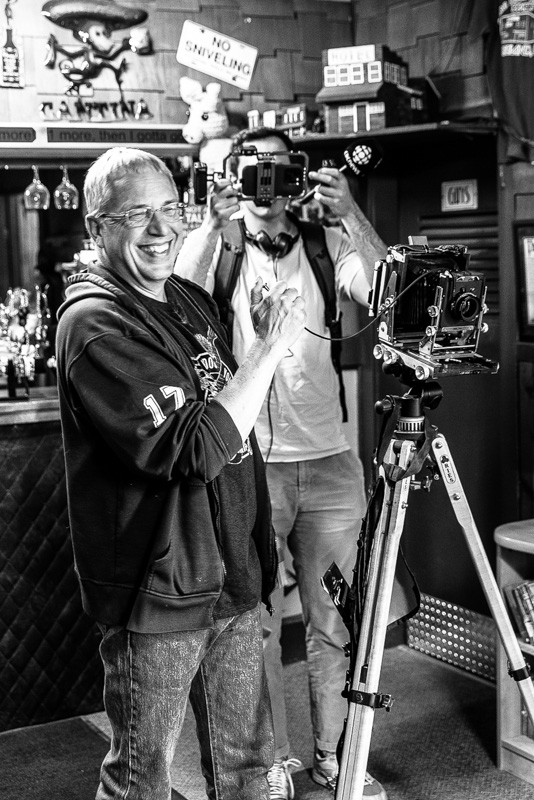
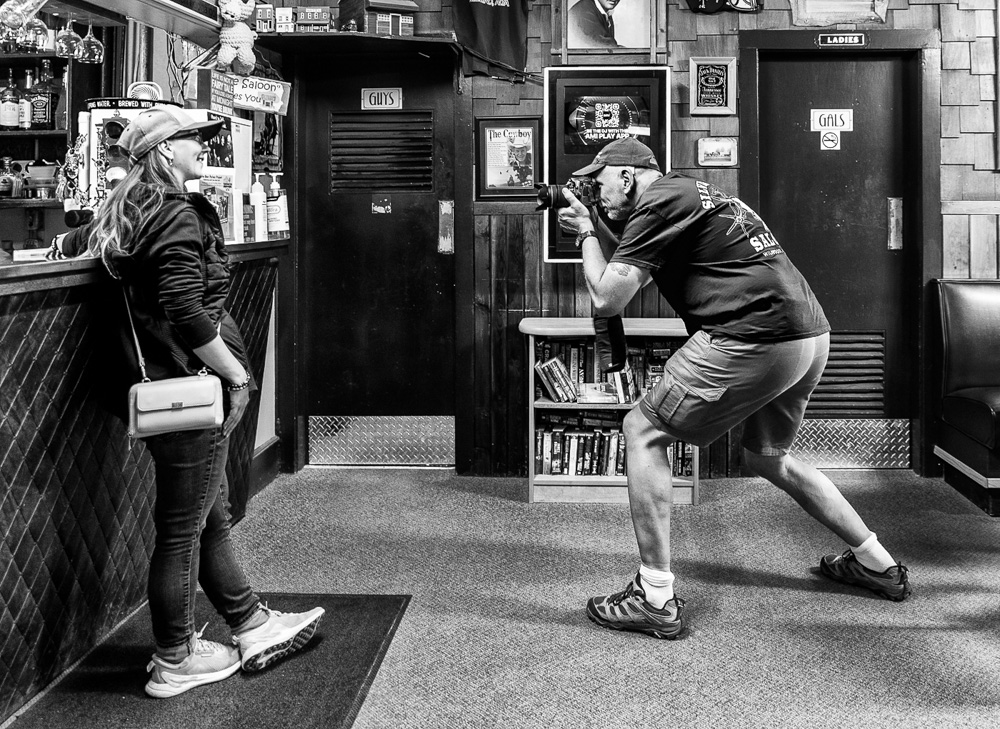
BP 33.0 & 33.1: Blue Saloon (Carseland Hotel) Carseland Alberta, built 1915 or 1916. Visited July 25th, with a quick follow up August 8th 2025. Team: Rob, Chris & Connie. Guest photographer Byron Robb. Camera Gear: Ebony 4×5″ View Camera (Film), Contax 35mm Film, Canon 6D & 70D. Byron: Canon R5.
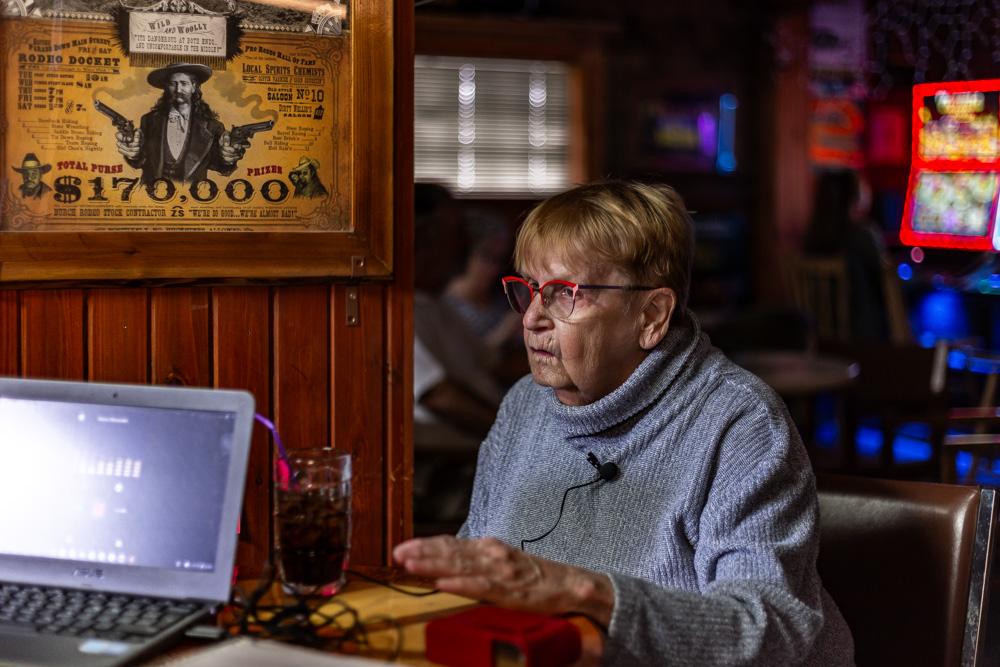
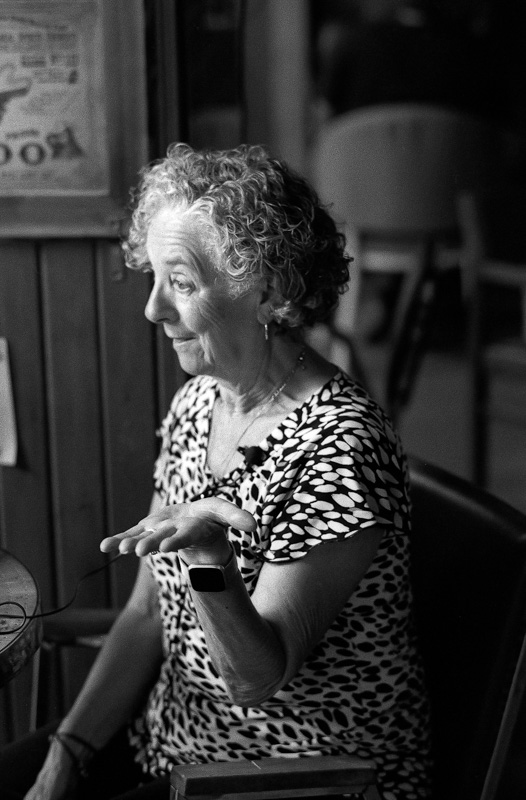
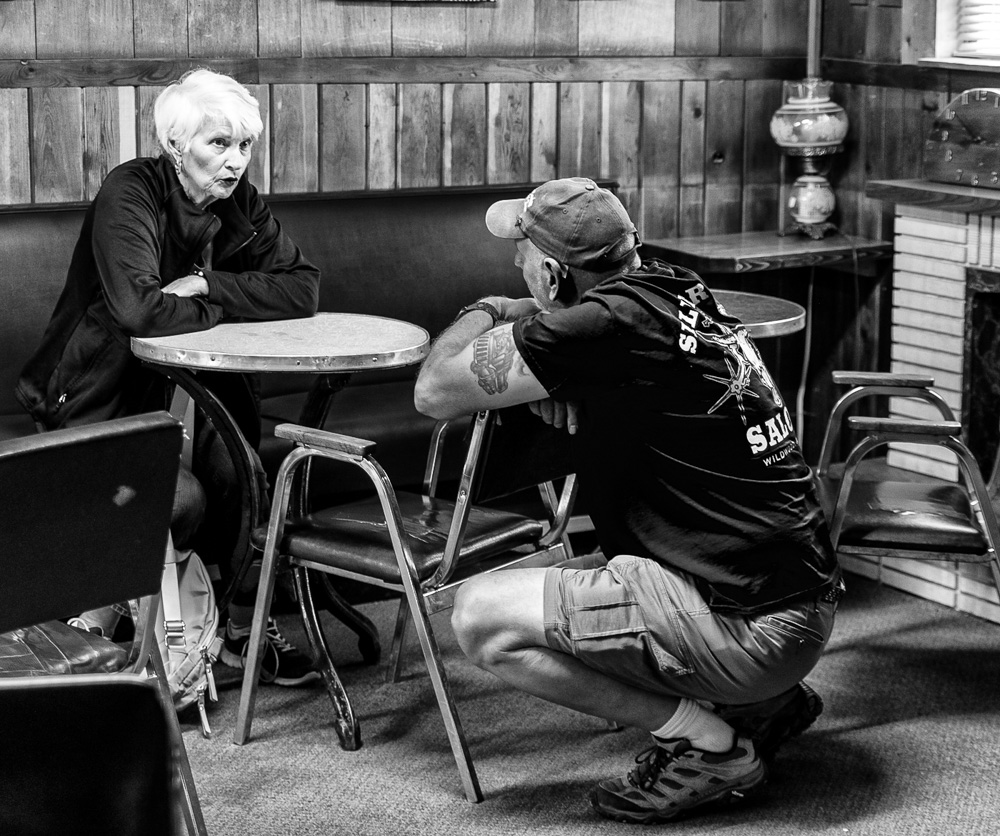
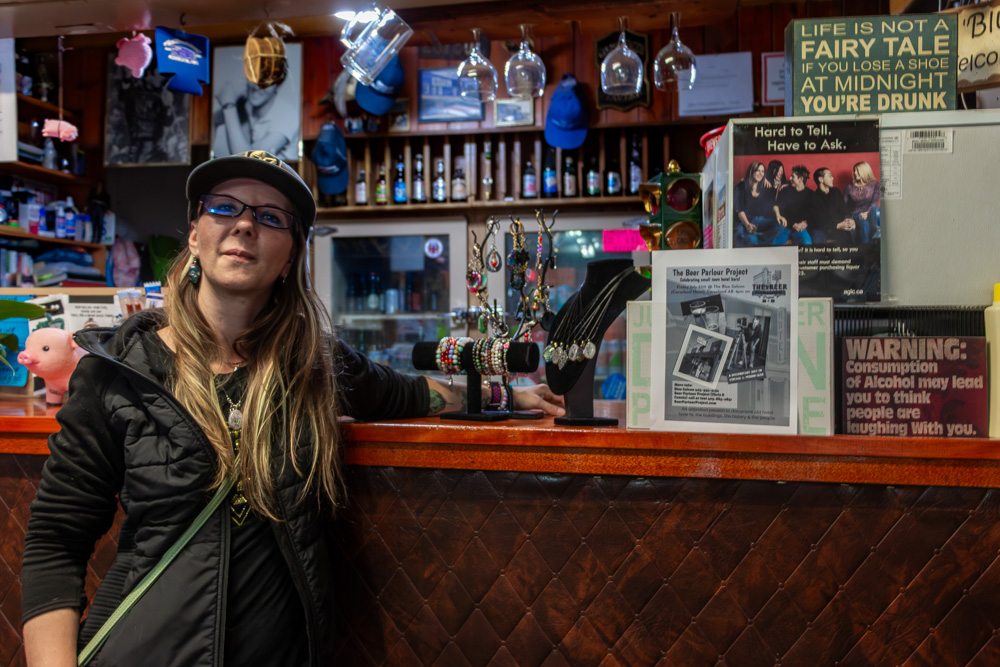
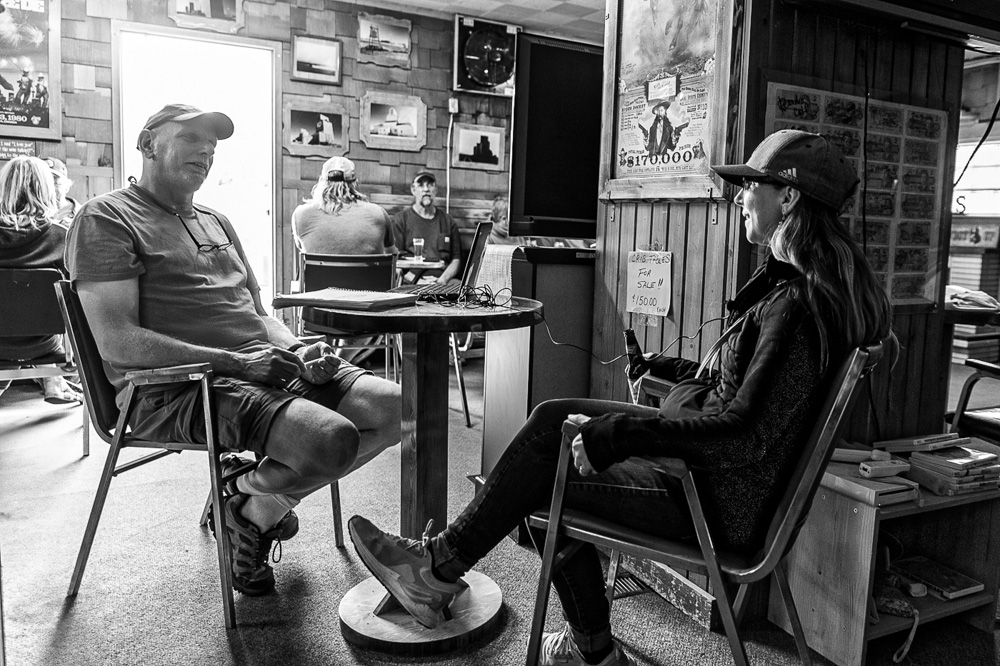
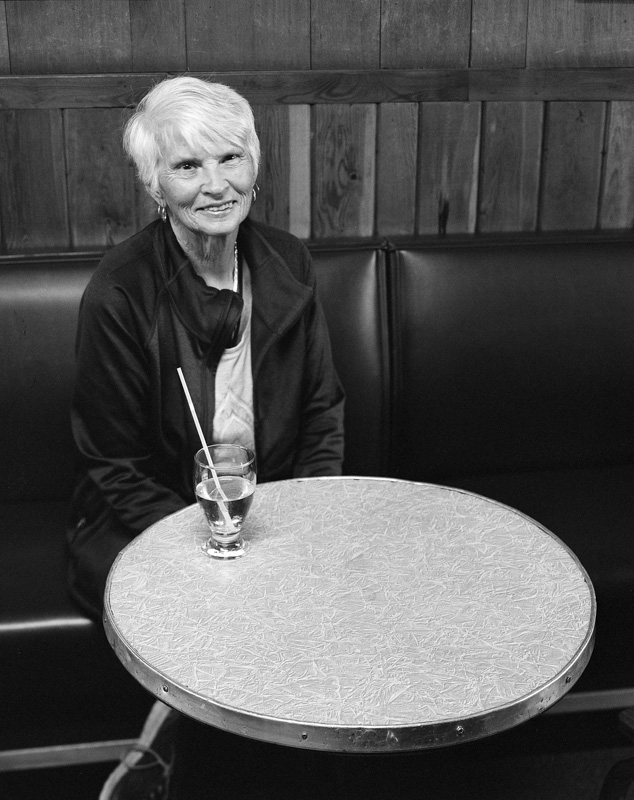
Interviews conducted with: Alana (owner), Laura (employee), Peggy (long time local), Robbie (daughter of former owners), Leighanne (local & former employee), and Judy & Lorne (Alana’s folks).
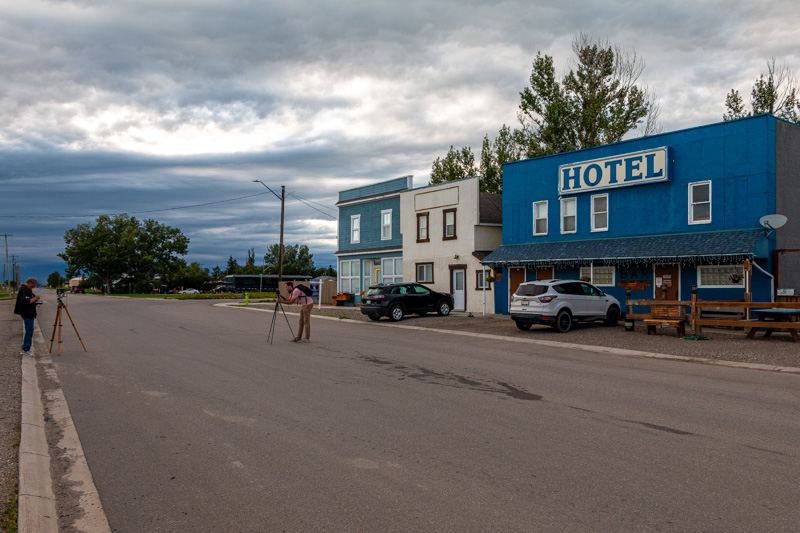
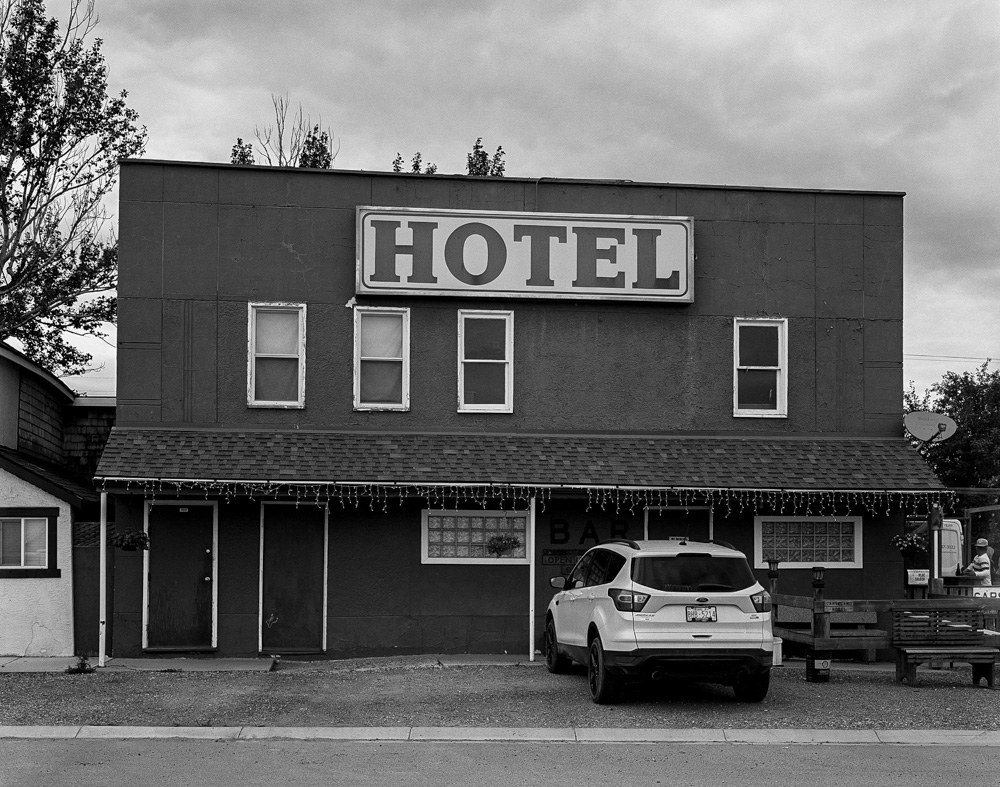
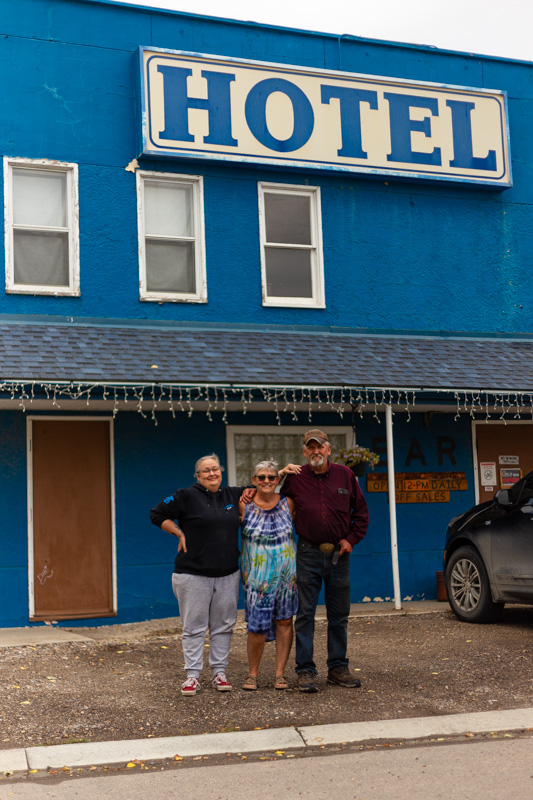
The Blue Saloon/Carseland Hotel is located on Railway Avenue East, between Main Street and Strangmuir Street in little Carseland Alberta. It’s bold in colour and you can’t miss it.
The local history book “More Trails to the Bow”, does not go into detail on the early history of the establishment, and instead our research is based on telephone and Henderson directories dating as far back as the mid-1910s.
“So a lot of people say this place is haunted. A couple weeks ago, I was working one night and it was around 10, 10.30 at night, later than our usual shift. I was finishing up my closing duties, just going through the things in my head to make sure I hadn’t forgotten anything. And I started feeling this energy. Yeah, I started feeling this energy like, okay, keep moving, go a little faster kind of thing. It wasn’t malicious in any form. It actually felt like it was highly energized and happy and it was good. I could feel literally like hands on my back, like pushing me towards the door. It was so cool and again, it didn’t feel malicious. It didn’t feel dangerous. It felt safe.” – Laura, on the weird things that happen late at night.
“Once you’ve worked at this place, there’s a really special connection.” – Leighanne.
“I got so good at shuffleboard, I could beat the pants off anybody…could make a few bucks on the side. I could, I could. I was pretty good at that. I did it just about every day…” – Robbie, on her side-hustle when working the bar.
Carseland was founded about 1914, and this corresponds with the arrival of the Canadian Pacific Railway. The line is interesting as it was constructed as a short cut to the original mainline dating back to the 1880s that used a more northerly, less direct route.
This new line through Carseland bypassed the original from Gleichen, to just east of Calgary and this shortened the route by a number of kilometres. It is referred to as the Gleichen/Shepard cut off.
“I think it was probably 71 to 77 that my folks were owners. We lived here, upstairs. I had just finished grade 12, so I’d just graduated. I was only here for a year working the bar and then I moved to Vancouver for work. I had muscles then. I could carry a whole tray of draft and set it down on the tables, and I don’t know how I managed that. I couldn’t do that now.” – Robbie.
“This place has been here for over 100 years, and it’s not going anywhere. You can’t miss it…that’s right…it’s big and blue!” – Laura.
“We’ve met rodeo stars and Sam Elliott was in here. He was visiting the guy that runs the stock animals. For the horses and whatnot used on the movie he was shooting locally. I was mad he never tipped the girls. Yeah, he was drinking for free, scotch, but he never tipped them. I said I was not thrilled with that attitude.” – Peggy.
The original mainline through Strathmore became a branchline, until it was eventually abandoned. The track running through Carseland sees heavy traffic and this became obvious during our visits to the Blue Saloon. Every passing train literally shook the building to its very core and they came often.
The train station once sat across the street and a little to the west of the hotel. Prime real estate such as this was very deliberately chosen and placing a hotel in close proximity to the railway was a common practice in the old days. The action was down by the tracks.
“I’m amazed we were able to stay open (during Covid). We got just so lucky because so many other (hotels) didn’t make it. We’re still feeling it. We’re still trying to claw our way back. We’re nowhere near where we used to be.” – Alana.
“I can tell you that when I moved here in 1989, I was 18 years old. The owner at the time, Sharon Zimmerman, had hired me probably two days after I arrived. Now, the reason why it is blue, because she was an Elvis Presley fan. So, Elvis’ favourite colour? Blue. Sharon painted it blue.” – Leighanne.
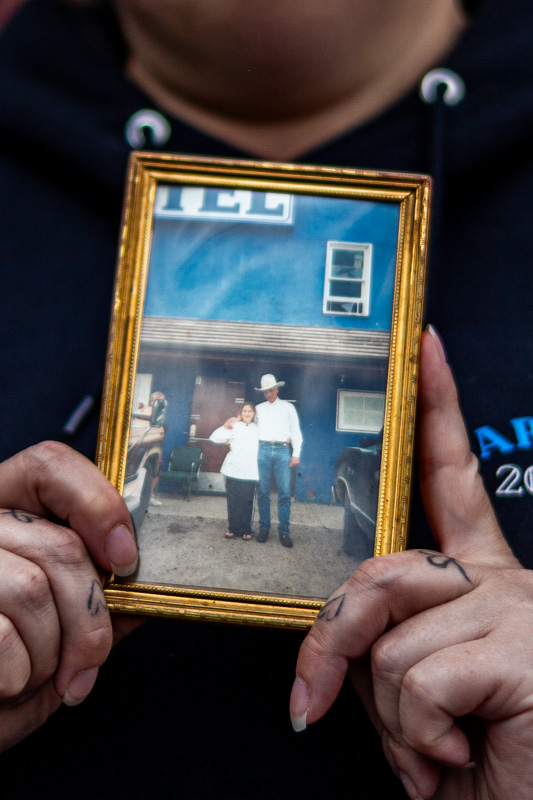
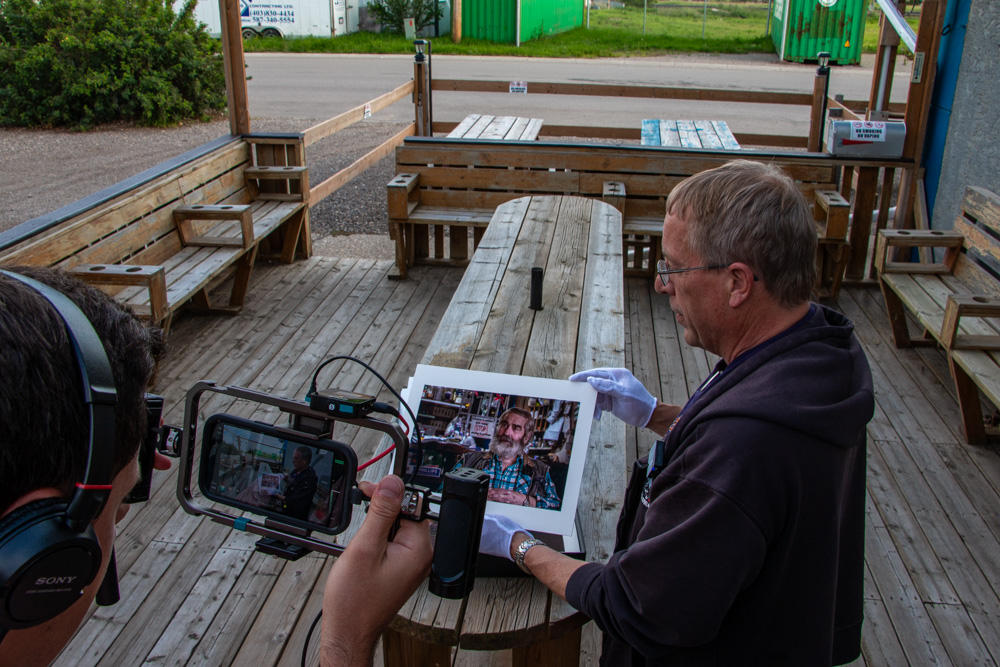
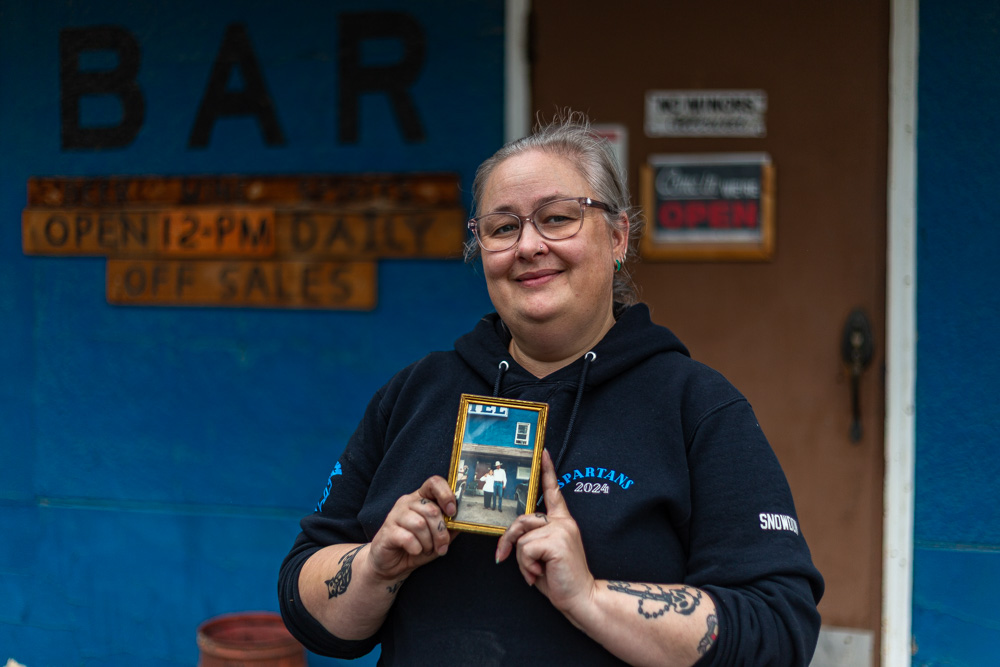
“The fella in the picture above the bar is also my son. He passed at the beginning of this year…so he’s here forever too.” – Alana (we can’t imagine anything more painful than the loss of a child).
There was a settlement of sorts prior to Carseland, known as Griesbach, but it was not a town in the true sense. It was named after Emil Griesbach, the first postmaster. His building was located a little south of the present town site, but he moved it here once the railway arrived.
The Bow River is a short distance to the south and boasts great fishing.
Griesbach became Carseland in December of 1914, though Mr. Griesbach continued in his role as postmaster for some time afterwards.
The name Carse is of Scottish origin and means fertile alluvial land, or bottomland. Interestingly, until 1923 the town name is spelled Carsland, minus the “e”, in directories.
“As I was emptying out the ATM, I looked towards where the phone used to be, just behind the bar. And keep in mind, again, the hotel was fully locked up. And I watched a lady walk over and pick up the phone. And then she wasn’t there. I’ve gone to leave out the lobby door and I’ve had the deadbolt open up halfway right in front of me. I have walked out of the bathroom and seen somebody standing there. I have been upstairs and I’ve been walking around and I go to leave and I see somebody pop their head out of one of the rooms upstairs. There’s nobody up there…” – Alana, on weird happenings late at night.
“We tear our buildings down. Anything that looks old, anything that looks like it’s been here longer than a year or two needs
to be changed. We’re embarrassed of our history, it seems…” – Peggy, worrying that old buildings like the hotel are disappearing too quickly.
“We lived in part of upstairs, but yes, there were rooms for rent there too. But a lot of times there was nobody staying in them. But very often, because my dad had a good heart, sometimes people would be too drunk to drive home. He would let them stay upstairs free of charge. My dad was a really great guy and if anybody needed something, he’d be right there. My mom always had pickled eggs sitting on the bar, and big dills.” – Robbie.
Records are sketchy and a bit contradictory, but it’s generally agreed the hotel was built in either in 1915 or 1916. The local history book is silent on that matter, although it does mention the old buildings next door. Those two are from that same time and in appearance the hotel seems to be of a similar style, so it’s most probably of that era as well. Hotels were always one of the first structures in a new town, so it makes sense.
These three buildings are all that remain of the old downtown. Immediately beside was the Carseland Meat Market and the building further west was once a hardware store, but now appears to be a private residence.
Prohibition began in Alberta in July of 1916, so it seems the timing was bad when they built the establishment, at least in respect to the operations of the Beer Parlour. Liquor paid the hotel bills best. Since we were unable to locate any data, it must be assumed the hotel survived on room rentals, or perhaps closed for a time. Phone books make no mention of a hotel during Prohibition at all.
The first confirmed record of the hotel that our research uncovered was in a 1924 Henderson Directory. It listed one Fred Rose as the owner but does not specifically mention the name of the hotel itself. Mr Rose also had a farm machinery dealership in town.
Coincidentally, 1924 is the year that Prohibition came to an end in the province.
The Carseland Hotel first appears by name in government telephone directories in 1927, with one JG Forbes noted as the owner. At least from this point forward, the business always had the name Carseland Hotel.
“Very welcoming town, very well, and it has changed, we’ve had a lot of different people over the years, I mean, when I first moved here, this bar was hopping Thursday, Friday, Saturday, right from happy hour right through to closing, so when I had to get people out of here at 3 o’clock, the lights started to flicker, and I would scream, everybody out, it’s time. So yeah, there’s a lot. Yeah, yeah, yeah, a lot quieter now, a lot, things have changed. I think post-COVID especially…” – Leighanne.
“This guy turned 100 in 2015. So we’re 110. We just turned 110. I came in today and it was raining on my pool table. Based on the fact that the driving rain was coming in sideways. And regardless of having a brand new roof put on, it still gets in. Something sags, moves, shifts, and then there’s a new opening.” – Alana.
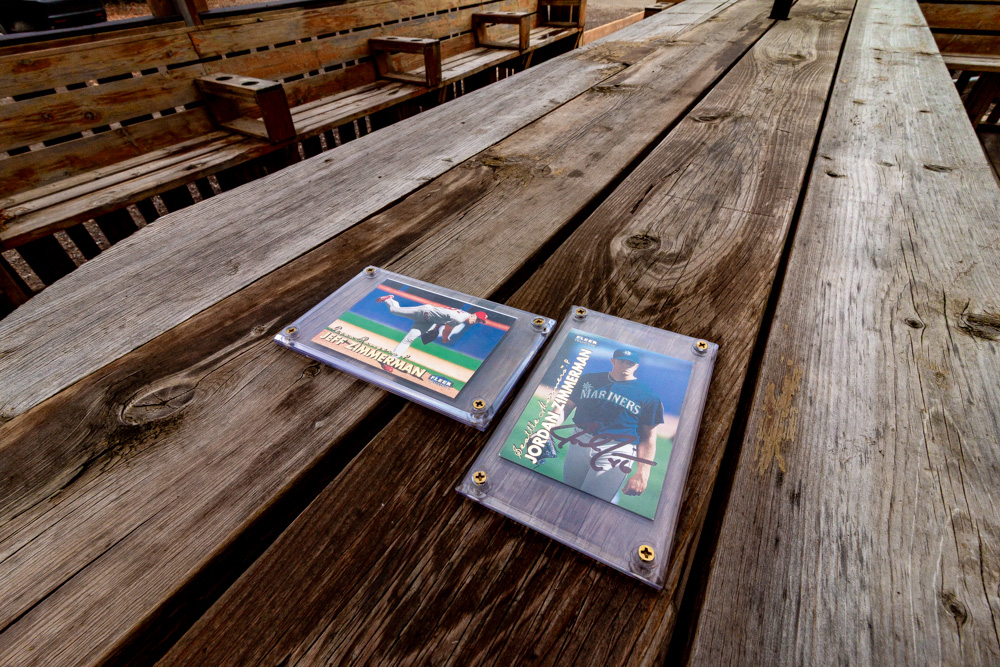
“They (the Zimmerman’s) had two kids, two boys. They were both in the Major League Baseball. Yep. So, I can’t remember what the teams, oh, Texas. One of them pitched for the Texas ball team, and I don’t know where the other one went, but he was in Major League as well.” – Leighanne.
In 1932 and 1933 there were no phone listings for the business, suggesting it may have closed due to the economic downturn of the times. The Great Depression was in full swing and no one had money.
In 1934 it reappears, with Forbes as the owner again and he lasted until the mid 1940s when an E Kgueger took over. By the mid 1950s there is a VH Bray listed as owner, and soon after an R Parsons, who lasted at least until the early 1960s. The telephone directory stopped listing owners after this point.
For several decades, beginning in the 1940s Carseland maintained a population of around 100 but prior it did not even register on any census. With the completion of the fertilizer and explosives plant west of town in the mid-1970s the population grew dramatically. By the ’80s it was over 400, before peaking at close to 700 in the early 2000s. Since that time it has shrunk a bit.
In 1976 Bill and Sharon Zimmerman acquired the hotel from an S Hill. Bill passed away in 2000 and Sharon continued to operate until her death in 2014. Alana took it over from Sharon’s sons just as the Covid pandemic hit. It was not a good time to be opening a business catering to the public and for the first couple years, it must have looked hopeless at times.
“Yeah, VLTs were off. You couldn’t play those. We went through a lot of the periods where you could only have people outside on the patio. Nobody is allowed inside. That in itself was just amazing, because it’s minus screw you outside and they’re all sitting there drinking ice cold beer in snowsuits. Just so we didn’t lose the place.” – Alana, on the dark, difficult days of the pandemic and how support from the community helped.
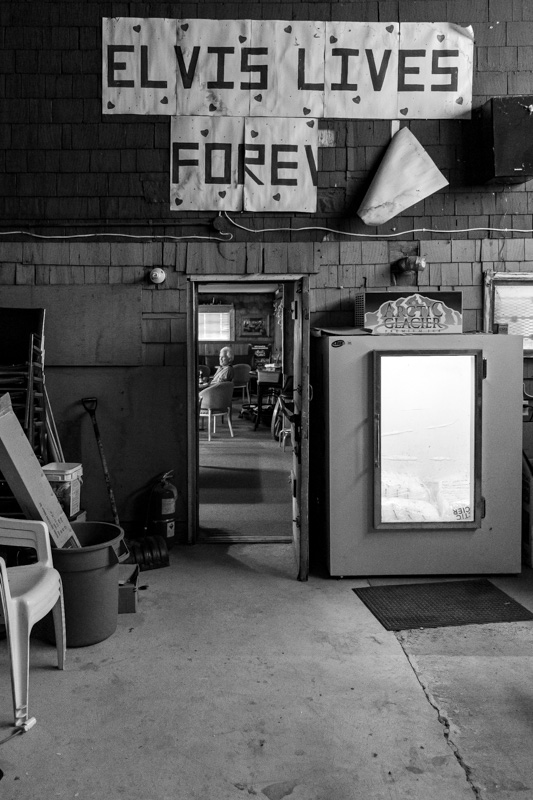
Sharon painted the building blue and came up with the Blue Saloon name. She was also responsible for all of the Elvis memorabilia found on the walls.
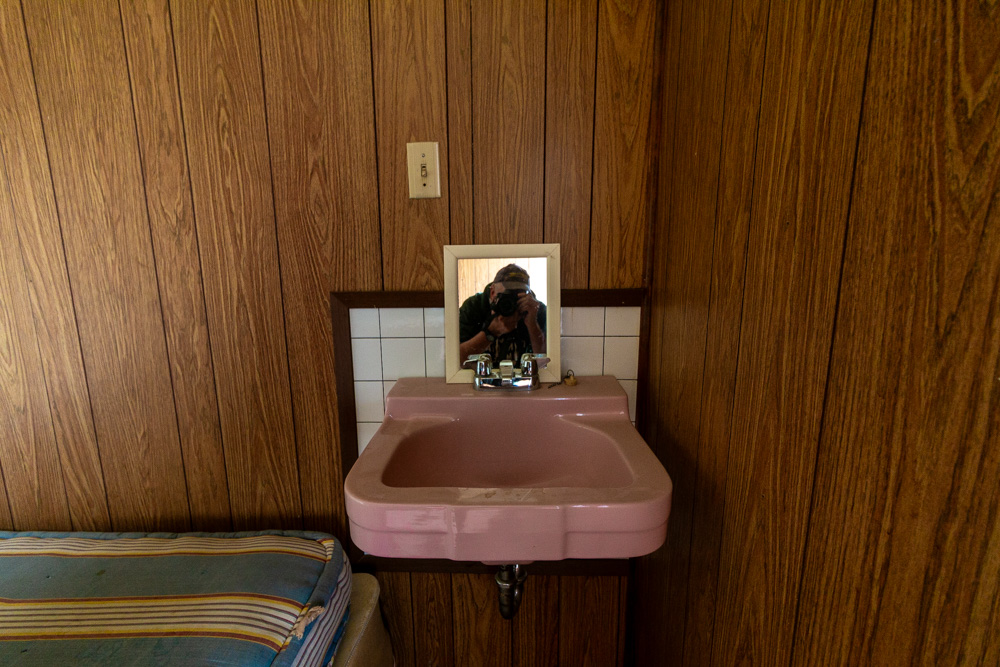
Rooms are no longer rented but they remained available into fairly recent times. Food services were also once offered but that practice has ended.
The Zimmerman’s were very community oriented and supported many sporting events in town. Their two sons, Jeff and Jordan were avid baseball players and did so a professional level for a time.
“I actually got rid of my shyness moving here because I, you know, 18, I was quite shy, and working at the bar, well, you couldn’t be shy. Well, you had to take charge…you either take charge or you leave.” – Leighanne.
Carseland once boasted six grain elevators, a general store, a barber shop with pool-room, several restaurants, a garage, a car dealership, a farm equipment dealer, a hardware store, meat market, bank, stock yards and the hotel. All were located in the downtown core.
Records suggest there was only ever one hotel in town.
Today the only operating businesses are a gas station with attached convenience store, a restaurant, liquor store, pharmacy and of course the Blue Saloon.
“I think the people that live here are friendly. Because I don’t feel any malice ever. It’s like I’ll be opening up behind the bar doing cash and whatnot and I’ll feel my body get all tingly and whatnot and I will say out loud, okay, not right now please, I’m trying to do something. And then it stops. Which is kind of nice. To be honest, I haven’t had that happen since my son passed.” – Alana, speaking of some of her permanent residents.
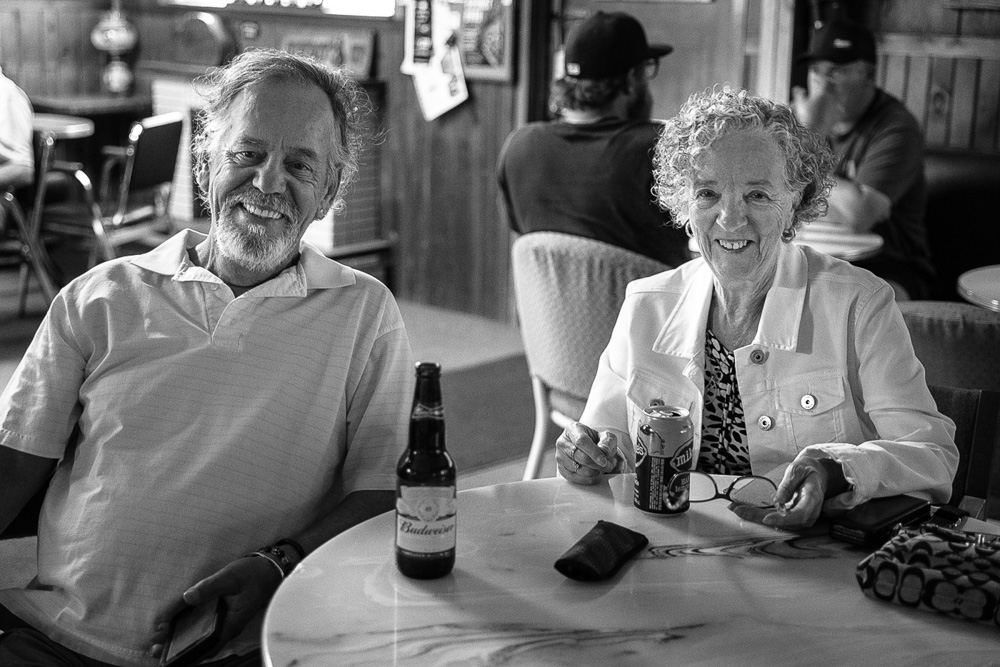
“We had strippers. Yes. Right there. Right in that corner (pointing). When they had the male strippers in there. I’ve heard that story a few times and it got raunchy.” – Judy & Lorne (amazingly, many small town hotels once hosted exotic dancers).
“We really do try to keep the Zimmerman name strong here, too, because Sharon had this for so many years. Sharon passed on towards the end of 2014. She has two sons, so it went to them. The older of the two bought his brother out and then he kept it for another five years. Yeah, about five years. September 1st, I will have owned it for five years. Great smack dab of COVID. It was painful, but we made it through. I couldn’t let this place close.” – Alana, sharing her passion for the business.
There are several large grain terminals in the general area today, as well as other industrial operations like the fertilizer plant. These along with farming and ranching employ most locals. Some residents work in Calgary and commute, since the city is not that far away.
Musician Ian Tyson, politician Ralph Klein and actor Sam Elliott have all stopped by hotel at various points in time. The building also appears in the movie Brokeback Mountain from 2005, but was temporarily painted a different colour for filming.
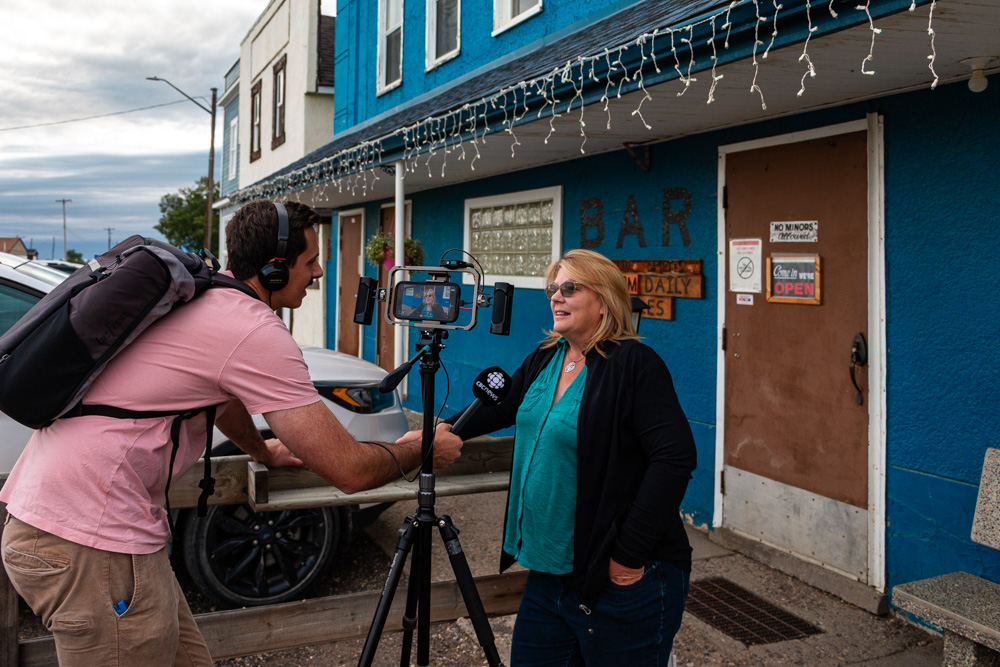
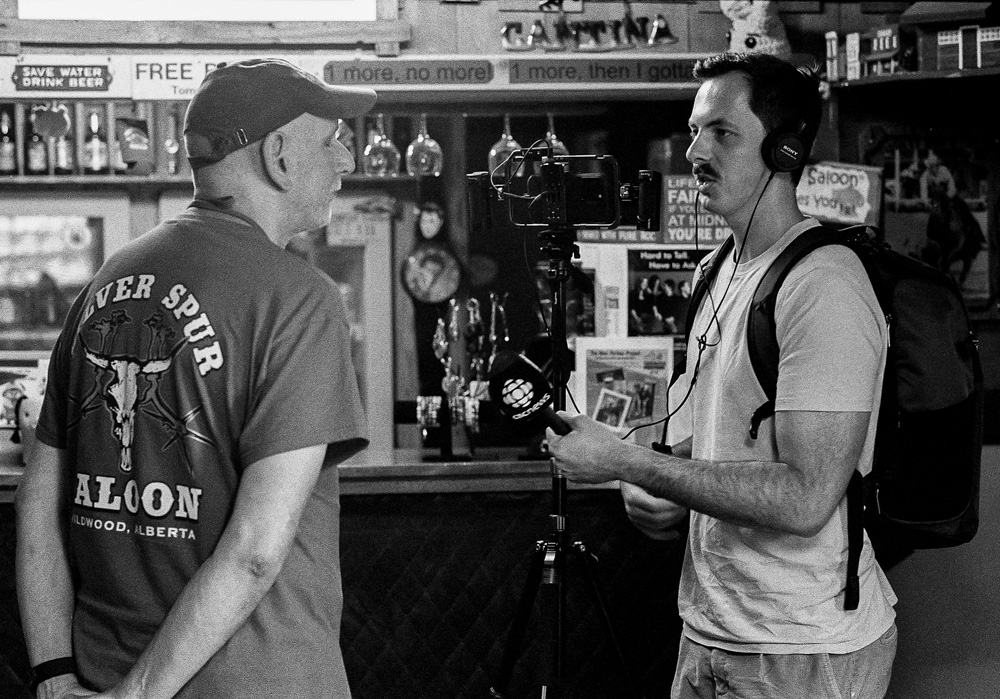
Reporter Andrew Jeffrey from CBC Calgary joined us at the Blue Saloon. More: Beer Parlour Project in the News (new tab).
Carseland, Alberta. Population about 550, located in Wheatland County and about 40km southeast of Calgary.
“The way they socialize has really changed. People aren’t going to neighborhood pubs or small town pubs like they used to.” – Peggy, on seeing changes the 30+ years she’s known the Blue Saloon.
“Sharon, being the big Elvis fan that she was, had an Elvis night. So, all of us girls dressed up with our hair in ponytails, and we had T-shirts that said Elvis Lives. We had Elvis show up in a limo. Elvis still lives upstairs in room nine. We had a couple of local people sing. One of them was my dad, and his favourite was Elvis. My brother sang some Elvis that night. It was just a wonderful get-together for the whole community, and we just embraced that. Sharon loved Elvis so much, and so did a lot of other people. It was a great party for everybody.” – Leighanne.
“When they filmed that little bit of Brokeback Mountain here, the crews came in and they didn’t want it to be blue, right? So they came in and they painted the entire thing beige. And then the main stipulation that Sharon, the previous owner, had was that I want that building painted blue again. And sure enough, they came in and painted it bright blue again. And then for the hundredth (anniversary), I kind of went and did a whole other coat of it, which was fun because if you would have drove by, you would have been laughing as you saw me hanging off the roof with an extremely long paint roller, trying to get the top of it, trying not to die well on the scaffolds, stuff like that. I did 90% of it with just a paintbrush because it’s so textured that you’re not going to get in there with a roller. There’s probably 100 layers of paint underneath.” – Alana (it might even be holding the building together!)
“Yeah, I love Carseland just because, I mean, it is big-time family-oriented. Everybody has each other’s backs around here. It’s great. So, we look out for each other. Our kids can be doing something bad, and we know instantly…” – Leighanne (faster than the internet).
“So right away I got on the phone, and I phoned Betty, and I said, Sam Elliott is here. Well, within, what, half an hour and this place was absolutely packed. Yeah, because we had the Betty, I’ll call her and everyone knows. Nothing travels faster than Betty.” – Judy, on word getting around that a film star had stopped by.
“Back in the day, I guess there was a ladies and escorts side and the men stayed on the other, so there was a wall. The second door, I think was over there behind the VLTs.” – Leighanne, speaking of when bars were gender segregated (1950s & 1960s).
“There were two bootleggers in town. So, it kind of used to make my dad a little mad because the bootlegger was right behind the hotel in one of the trailers back here. You have to follow the rules. He doesn’t have to. So, a lot of the locals would go and see him first, and then they’d come over here. By the time they got here, lots of times, they’d already had too much to drink. And my dad would say, I don’t think you should. So, that kind of annoyed him…” – Robbie, back when beer parlours were not allowed to open early or on Sundays, people found other sources.
Beer Parlour Project in the News (new tab) – CBC News July 2025 at the Blue Saloon (Carseland Hotel), Carseland Alberta.
“She walks into Smokey’s one hip at a time
Like a broken field runner slippin’ through the lines
He likes the way she looks, so he calls a little wife
says don’t wait up for me, I’ll be workin’ late tonight.”
Joe Diffie – Third Rock from the Sun.
Click image to open lightbox.
35mm = Contax 35mm Film
4×5″ = Ebony 4×5″ View Camera
Film images may reflect the unique challenges & difficulties of shooting in these low light environments.
Know more (new tab): Blue Saloon (Carseland Hotel) Carseland Alberta