Rockyford Hotel (Triple B Tavern)
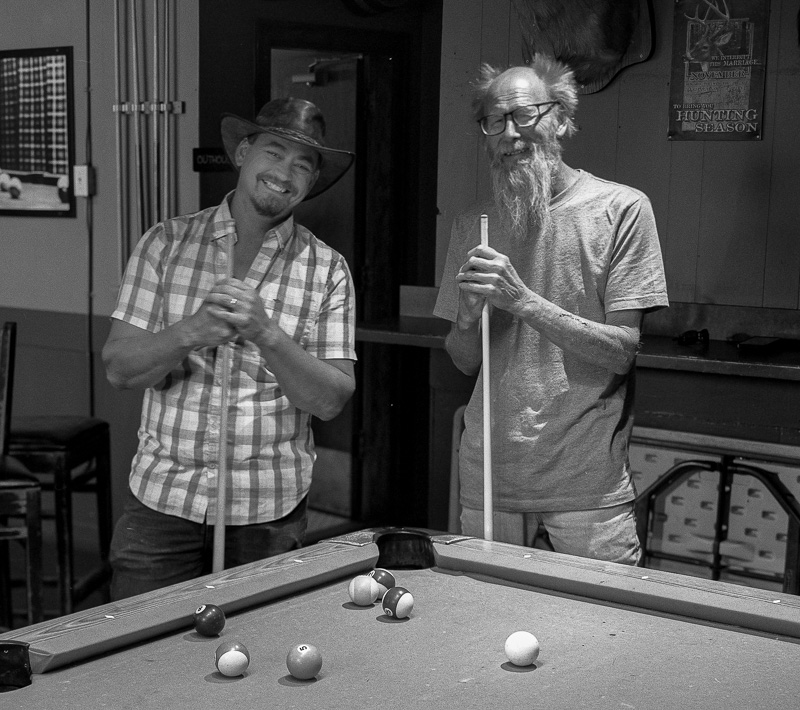
BP 28.0 & 28.1: Rockyford Hotel (Triple B Tavern), Rockyford Alberta, built 1936. Visited June 13th 2025, with a quick follow up July 5th. Team: Rob, Chris & Connie. Guest photographer Arturo Pianzola. Camera Gear: Ebony 4×5″ View Camera (Film), Canon 6D & 70D. Arturo: Leica Digital & 35mm Film.
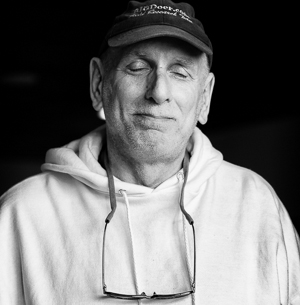
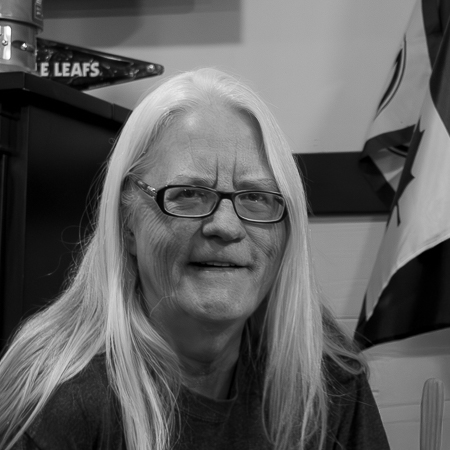
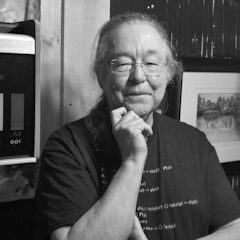
Interviews conducted with: locals Brian & Sid, server Shannon, April from the kitchen & owner Dalia.
Rockyford dates back to 1913 and this roughly corresponds with the arrival of the Canadian Northern Railway. Virtually every town on the prairies sprang to life in the same manner during the first couple decades of 20th century. The railway came and the towns established almost concurrently.
This line ran from Edmonton and Vegreville, south to Calgary, by way of Drumheller. Constructed under the charter of the Alberta Midland, it was a paper railway used solely for tax and funding purposes. The moment the line opened for through traffic in 1914, it officially became a Canadian Northern operation.
“I looked at like 80 properties in three weeks with my realtor all over Alberta, the border of BC, the border of Saskatchewan. And we actually liked this bar, but it wasn’t going to be for sale because the owner had decided not to sell it because he had a new manager. So two or three weeks pass and my realtor is like, well, if you’re still interested in the Rockyford hotel, he’s decided to sell it. He wants out because he was a farmer. His wife had owned it but had passed in January. This is now April. So we came back, did a property inspection here. There were issues like with any old building.” – Dalia, on buying the Rockyford Hotel in 2012, after a lengthy search.
“The Standard Hotel’s closed, so you come here. The Standard Hotel used to be beautiful…the bar was a fun place. The guy, Dave, his cooking was good…really phenomenal.” – Sid & Brian, they reside closer to Standard, but with the closing of the hotel in that town, they now come to Rockyford.
The federal government amalgamated the financially strapped Canadian Northern Railway along with those of some rivals around 1920, and formed Canadian National Railways. With this, sections of the Alberta Midland north of Drumheller were then downgraded to branch line status under Canadian National.
A second line connecting to Saskatoon, joined the Alberta Midland a little outside Drumheller and it then became the main traffic source. This line, which passed through Rockyford on its way to Calgary, remained in service into the 2000s.
A small portion of the former Alberta Midland near Stettler is all that remains of the north line. It is used by tour trains of Alberta Prairie Railway Excursions.
“So I tried to pay homage to me naming it triple B tavern, which stands for beer, booze & breakfast. So if you look around everything is set in groups of threes.” – Dalia.
“Yeah, the other servers have said things move around, or doors close on them and stuff. I just haven’t felt anything really, per se, yet, which is to say you never know. I do hear the stories, but if there was ever a ghost, it’s down there somewhere.” – April, speaking of spirit stories associated with the hotel, while pointing down towards the cellar.
“I’ve been in the hotel industry I guess since I was 21. I have my degree in accounting and my master’s in sociology. Yeah, so I actually started off as a controller in hotels overnight, at a Best Western in Ontario.” – Dalia, on knowing the business before taking the plunge.
Rockyford had modest beginnings, but reached village status by 1919. In those days a population of 100 was necessary for this to be granted. By 1930, the number of people swelled to 350. By the start of the Second World War it almost halved, but then recovered nearly to its previous levels into the 1950s.
It stayed pretty static into the 2000s, but Rockyford has seen a bit of a growth spurt in recent years. It has now grown to nearly 400.
In the 1920s and 1930s there was an additional 60 to 120 farm families living in the immediate area. With the consolidation of farming, and the much larger modern operations of today, rural populations have significantly declined.
“All of a sudden I go back and forget something, walk into the kitchen or out here, go immediately back and the door is closed. It’s always propped open and I’m alone, so how did it close?” – Shannon, on strange happenings late at night when closing up.
“We try to keep it positive, upbeat, fun for everybody where everybody can come and feel welcome. It doesn’t matter how old, how young, where you’re from.” – April, on the welcoming vibe (which we felt too).
“You know, that movie, So we Bought a Zoo? I had just watched that. And I thought, oh my God, I have literally bought a zoo.” – Dalia.
Rockyford was named by the chief surveyor for the Canadian Northern Railway, a man by the name of Beaumont. It is in reference to a shallow rocky ford of Serviceberry Creek, a short distance from town. This crossing was used by natives groups and later settlers.
In the early days Rockyford boasted the usual assortment of stores and services downtown. Grocery stores, restaurants, a hardware store, bank, barber shop, pool room, implement dealer, lawyer, lumber yard and garage are all mentioned. The garage sold cars made by the Ford Motor Company and creatively used the name Rocky Ford Garage.
There were several grain elevators down along the railway line.
“And it was all the stupid reasons that I fell in love with this place. Nothing to do with the financials, because they were not great, but I really firmly believed that I could make it work.” – Dalia, on sometimes relying on a hunch.
All that remains today is a grocery store, a couple of eateries, including the one in the hotel, and little else. Like almost every other small prairie town, the main employers are agriculture and natural resources.
The current Rockyford Hotel dates to 1936 and replaced an earlier establishment on the same lot lost to fire the year before. A sign on the current building states est.1926 which also references the original hotel.
Newspaper accounts of the time give a detailed report of the blaze. It happened on November 2nd of 1935 and twenty guests were forced to flee the building in their night attire. The thermometer read eleven below zero (Fahrenheit) at 6:00AM. That is -24C and would be a very cold night for that time of year.
“The fire escape wasn’t even attached to the hotel. It was old and rickety and just blowing in the wind. And the whole property was overran by lilac bushes as tall as like. Lilacs are nice, but not when they’re in your hotel.” – Dalia, on the early challenges faced.
Several guests were overcome by smoke but successfully revived, while others suffered from exposure. Due to impassable roads fire departments in Calgary or Drumheller were unable to lend assistance.
Local fire fighters and volunteers battled the flames with chemical agents and a bucket brigade. Losses were in the range of $12,000 to $15,000. There was earlier fire in downtown, in 1930, but the earlier Rockyford Hotel was spared then.
It appears that there never was a second hotel in Rockyford, but a Maple Leaf boarding house is mentioned in early reports. One document called it a hotel.
“Well, my grandfather loved lilac bushes and he put it out for me. And then I bred labs for years, uh, black labs, and the name of my kennel was Stonewood. And when I saw this place, as you can see the front of the bar, the veneer is all stone and it’s all wood. And I was like, oh, this is like speaking to me on so many levels, And my grandfather was a hotel owner. Like all the stars are aligning. It must, must be..I was 32 years old when I bought this place.” – Dalia.
The Rockyford Hotel is situated on Main Street just off Railway Avenue. This was a prime location and put it just a short distance away from the train station. Back then, everything and more importantly, everybody came and went by train. On arriving in town one of the first things you would see was the hotel.
Many small prairie communities used Main and Railway to mark the most important intersection and it is not unique to Rockyford. In the early days, the railway was critically important to small prairie towns like this.
The one story section on the north side of the hotel was used to expand the Beer Parlour. While the date of this addition is not known, the style of construction suggests it happened in the 1940s or early 1950s. Glass block were used and this material proved very popular during this era.
“In today’s society where you can spend your money anywhere, it’s super important to let people know that you appreciate them. We are family owned and operated. I own it. My daughter’s here, you know. My husband helps out. My parents help me do maintenance and stuff. 100% we rely on and care about the place and we need to be here.” – Dalia.
“We have a herd of deer that you just randomly go outside. Sometimes I go out for a breath of fresh air and they’re just walking down the street. They’re the town’s herd and when I leave at night, high beams are on and you drive really slow.” – Shannon, on the local wildlife (we didn’t see them this night).
There was also a big boom in the Beer Parlour business in post war Alberta and many hotels scrambled to add capacity like this. We see this all the time.
There’s an old cellar, probably once used as the beer cooler, underneath the bar.
The local history book makes no mention of who owned the establishment over the years, but local phone directories confirm a few. We counted five, but its a safe bet to assume there were likely many more over the years. Typically these establishments changed hands numerous times.
“At Christmas time, we had all these like really fancy little glasses that were etched and stuff. And we had them on the shelf for like fancy hot drinks and stuff. And they would literally just fly off the shelf and smash. So when this medium says and this we had this reading done in like 2020, around the COVID time when you weren’t allowed to have people in and stuff. Yeah, so she was like, everything that you do feminine, she doesn’t like it. But yet she’s a super feminine spirit. You could smell her Chantilly lace. And we were all like, oh, that’s what we always smell. And she smoked cigars. There’s certain spots in the back that sometimes you can just, I’ll be in the office. And you can hear somebody step down on this metal ramp. And you go and there’s smoke…it smells like cigar smoke.” – Dalia.
The hotel, both the original and current incarnation, had the only payphone in town for many years. Incidentally, phone service arrived in Rockyford fairly early on, so around 1917.
The Rockyford Hotel rents out rooms to longer term tenants, but no longer operates as a hotel in the traditional sense. To reflect the importance of the bar today, the name Triple B Tavern is usually used when speaking of the business. The hotel also has a small family restaurant.
Rockyford, Alberta: Population around 400, is located in Wheatland County, 95km northeast of Calgary, and about 55km southwest of Drumheller.
“Yeah, I got friends in low places
Where the whiskey drowns
And the beer chases my blues away
And I’ll be okay
Yeah, I’m not big on social graces
Think I’ll slip on down to the oasis
Oh, I got friends in low places”
Garth Brooks – Friends in Low Places
Click image to open lightbox.
4×5″ = Ebony 4×5″ View Camera
Film images may reflect the unique challenges & difficulties of shooting in these low light environments.





Know more (new tab): Rockyford Hotel (Triple B Tavern) Rockyford Alberta